
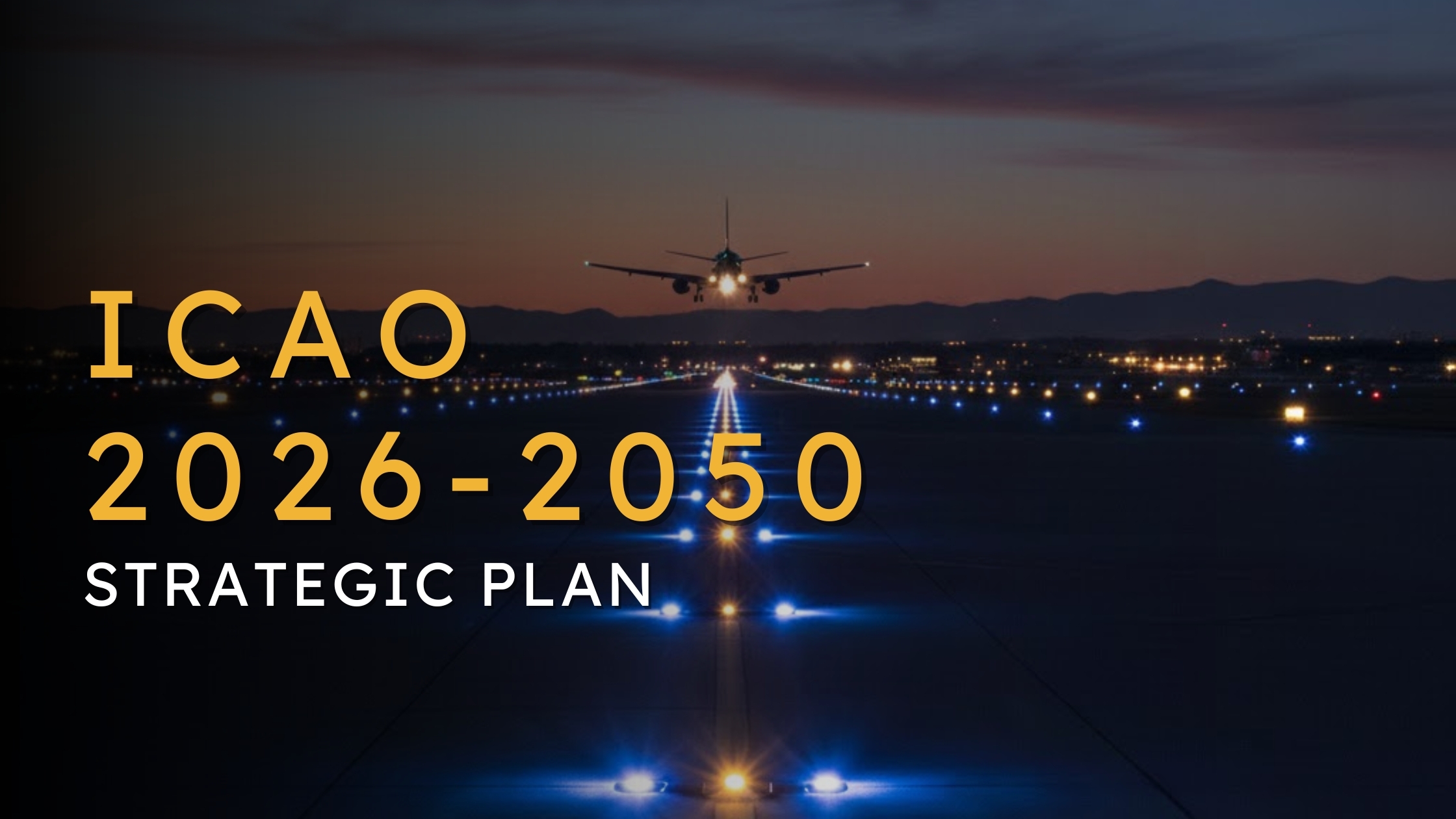
The International Civil Aviation Organization (ICAO) has recently presented its Strategic Plan 2026–2050, titled “Safe Skies, Sustainable Future”. This long-term roadmap defines how global aviation will evolve over the coming decades, addressing safety, sustainability, operational efficiency, and connectivity.
While the plan is often discussed in relation to airlines and air navigation services, its implications for airport infrastructure, and particularly for Airfield Ground Lighting (AGL) systems, are equally significant.
ICAO’s Vision: Safe, Sustainable and Connected Aviation
The ICAO Strategic Plan 2026–2050 is built around a clear vision: a global civil aviation system that is safe, secure, efficient, resilient, and environmentally sustainable, while supporting economic and social development worldwide.
To achieve this vision, ICAO has defined three long-term global aspirations:
- Zero fatalities from aviation accidents and acts of unlawful interference
- Net-zero carbon emissions by 2050
- Seamless, accessible and reliable air transport connectivity for all States
These objectives will shape future regulations, standards, and recommended practices (SARPs), directly influencing airport operations and infrastructure investments.
Key Strategic Objectives Impacting Airport Lighting Systems
1. Enhanced Operational Safety
The ambition of achieving zero fatalities reinforces ICAO’s strong focus on safety-critical airport systems. Runway, taxiway, and apron lighting play a fundamental role in maintaining safe operations, particularly under low-visibility conditions.
As a result, airports can expect:
- Stricter performance and reliability requirements for AGL systems
- Increased emphasis on redundancy, monitoring, and fail-safe design
- Greater adoption of advanced LED technology and individual light control and monitoring systems (ILCMS)
Reliable and continuously monitored lighting systems will remain essential to support ICAO’s safety objectives.
2. Sustainability and Environmental Responsibility

One of the most transformative elements of the ICAO Strategic Plan is the commitment to net-zero carbon emissions by 2050. Although this target mainly addresses aircraft emissions and sustainable aviation fuels, it also has a clear indirect impact on airport infrastructure.
For airfield lighting, this translates into:
- Increased focus on energy efficiency
- Replacement of legacy halogen systems with low-consumption LED solutions
- Optimized power usage through smart control and monitoring systems
- Reduced maintenance-related emissions through longer equipment lifecycles
Energy-efficient AGL systems will become a key component of airports’ overall sustainability strategies.
3. Seamless and Reliable Airport Operations
ICAO highlights the importance of aviation as part of a coordinated, resilient and accessible global transport system. This includes improving airport operational efficiency and minimizing disruptions.
Digitalization and system integration are essential enablers of this objective. For AGL systems, this means:
- Integration with airport operational platforms
- Real-time monitoring and fault detection
- Faster maintenance response times
- Improved situational awareness for airside operations teams
Smart airfield lighting solutions support smoother airport operations and align with ICAO’s vision of modern, data-driven infrastructure.
Traffic Growth and Infrastructure Readiness
ICAO forecasts that global passenger traffic could grow from approximately 4.6 billion passengers today to over 12 billion by 2050. This growth will place increasing pressure on airport infrastructure.
To safely accommodate higher traffic volumes, airports will need:
- Highly reliable lighting systems with minimal downtime
- Scalable solutions capable of supporting runway and apron expansions
- Technologies that enhance safety without increasing operational complexity
Airfield lighting will continue to be a critical element in ensuring capacity growth without compromising safety.

At AES Airport Solutions, we are committed to supporting airports throughout this transition by providing reliable, ICAO-compliant, and forward-looking AGL solutions. By combining proven technology, engineering expertise, and a deep understanding of international aviation standards, we help airports prepare not only for today’s requirements, but for the challenges and opportunities that lie ahead.
As the industry moves toward 2026 and beyond, collaboration between regulators, airports, and technology providers will be key. AES Airport Solutions remains ready to be a trusted partner in shaping safer, more efficient, and more sustainable airfield operations worldwide.